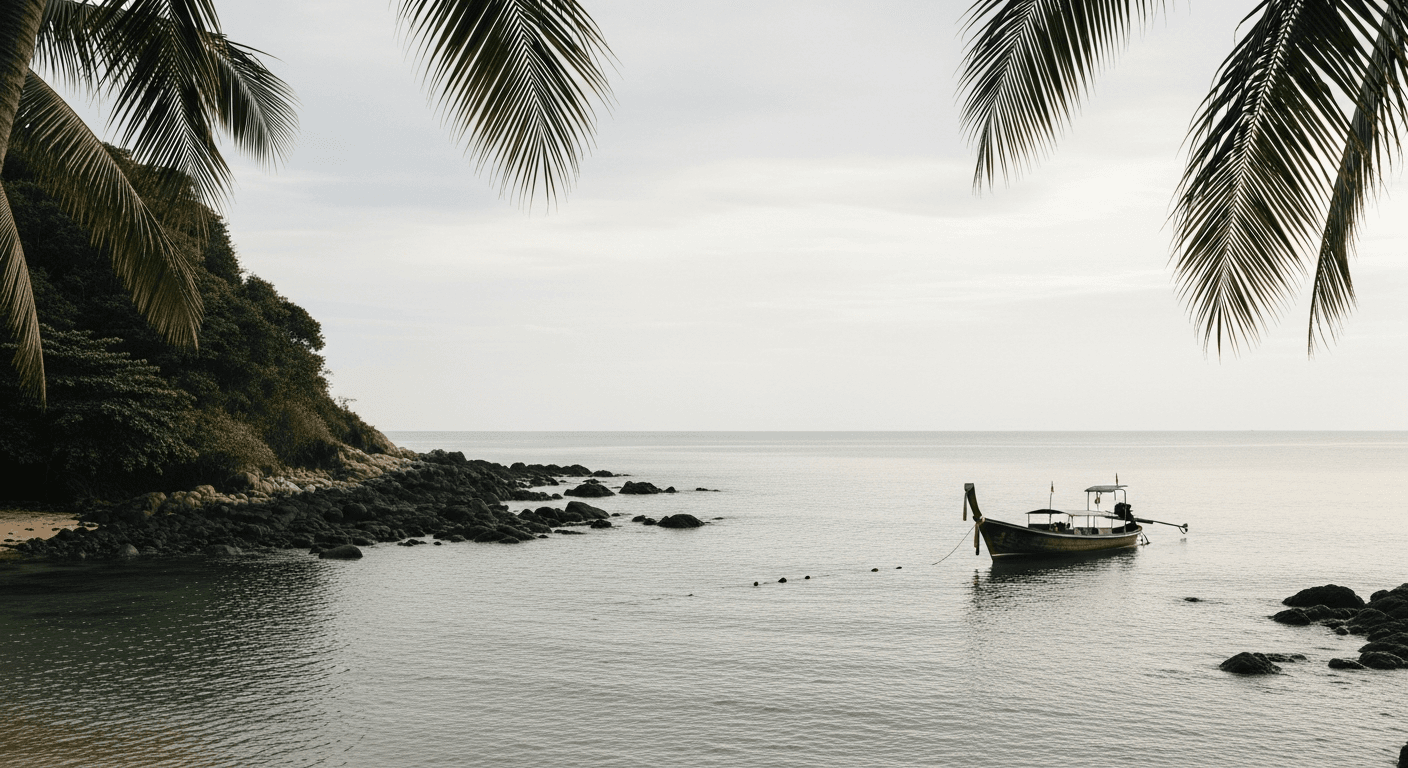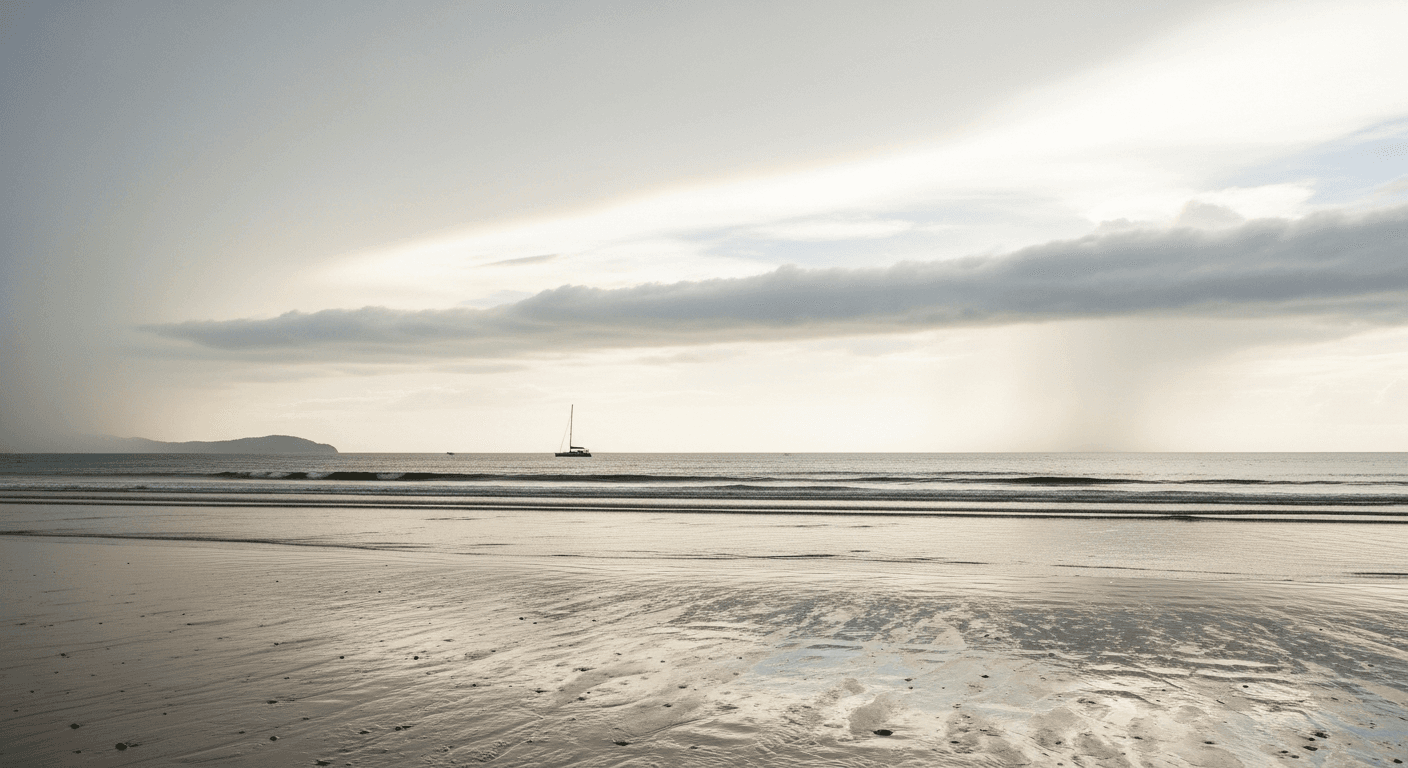
Most of Thailand follows the same wet-and-dry rhythm: dry from November to April, wet from May to October. Koh Samui is the exception. The Gulf of Thailand brings a different system, and the months that work for Phuket or Bangkok are not the months that work here.
This guide is the practical timing read we give clients on a discovery call. It applies equally to incentive programs and executive retreats.
The Samui season at a glance
| Period | Weather quality | Rate level | Risk |
|---|---|---|---|
| February to April | Excellent (driest) | Peak | Low |
| May to early June | Very good | High shoulder | Low to moderate |
| Late June to August | Good (occasional showers) | Mid | Moderate |
| September to early October | Mixed (building wet) | Low shoulder | Moderate to high |
| Late October to November | Poor (monsoon) | Lowest | High |
| December to January | Improving | High (holiday peak) | Moderate |
The dry window: February through May
The reliable months. Sea temperatures sit in the high twenties Celsius, daytime air around 30 to 33, with rain risk under 15 percent on most days. This is when we run most outdoor gala dinners, beach-anchored incentive programs, and full-itinerary retreats with island-hopping components.
Rate-wise, this is also the most expensive period. Hotels know what they have, and the major properties hold their rack rates firm. For a 50-pax incentive program at this time of year, expect to pay 80 to 100 percent of published rates with limited concession room.
If your program needs photographic guarantees, this is the window.
The wet window: October through December
The monsoon system rolls in from the northeast, hitting Samui's east and south coasts hardest. November is the wettest month, with multi-day rainfall events that can cancel boat charters, flood beach access, and create real airline disruption.
We usually advise against November programming for groups above 30 pax. The risk-adjusted cost calculation does not work: a single weather day can write off a USD 30,000 anchor experience.
December is the recovery month. By the second week, rain frequency drops. The week between Christmas and New Year is the holiday-peak crush, with rates back at full and most hotels at capacity for leisure travelers. We do not recommend running programs through this period unless the buying committee specifically wants it.
The middle ground: June through September
The least understood months on Samui, and often the best value-to-experience trade in our portfolio. Showers happen, but they come in afternoon bursts rather than multi-day systems. Mornings and evenings are usually clear. Sea visibility for diving and snorkeling is good.
For risk-tolerant briefs, this is where we book most of our value-tier programs. Hotels are 20 to 30 percent below peak. Restaurant availability is easier. The island is quieter.
The trade-off: photography is less reliable. If the program depends on a published recap reel for sponsor reporting, the dry window is still the safer bet.
Cultural and local timing notes
A few dates worth pre-empting:
- Songkran (Thai New Year), April 13 to 15. Water-throwing celebrations close streets and disrupt some venues. Some Halia clients lean into it as part of a cultural program. Most prefer to schedule around it.
- Buddhist Lent (mid-July to mid-October). Officially a non-drinking period for observant Thais. In practice, restaurants serve alcohol normally, but a handful of public events go dry. No real impact on most programs.
- Vegetarian Festival (October). Local food culture shifts. Mostly relevant if the program includes street-food walks or markets.
- Full Moon Party on Koh Phangan (monthly). If your program includes a Phangan extension, avoid the full-moon weekend. Hotel rates spike, transport fills, and the demographic on the boats shifts heavily.
When to start the booking conversation
Demand calendar for Samui:
- For February to April programs: start the conversation 9 to 12 months out. Hotel blocks of 50+ for these months close inside 6 months.
- For June to August programs: 4 to 6 months out is usually enough.
- For October to December programs: can be booked tactically in shorter windows.
Pricing locks earlier than most clients expect. By month four before arrival, the room block is usually contracted, the F&B menu signed off, and the activity vendors deposited. The two months before arrival are mostly logistics and final headcount confirmation.
How we factor weather risk into a program
Three operational defaults we apply on every Samui program, regardless of season:
- Indoor backup for every outdoor activity. Always specified in the contract, not as an afterthought.
- Two-day weather buffer on flight bookings. For groups arriving from Bangkok or Singapore, we recommend buying flexible fares on the bookend days.
- Activity insurance. Boat charters and outdoor events are written with weather-contingent refund clauses where possible.
For a longer read on which properties we anchor each program at, see five-star hotels for incentive groups on Koh Samui. For the broader case for the island over Phuket or Bangkok, why Koh Samui works for executive retreats covers the trade-offs.
If you have a date range in mind and want a read on whether it works, send us the brief. We respond inside 48 hours.