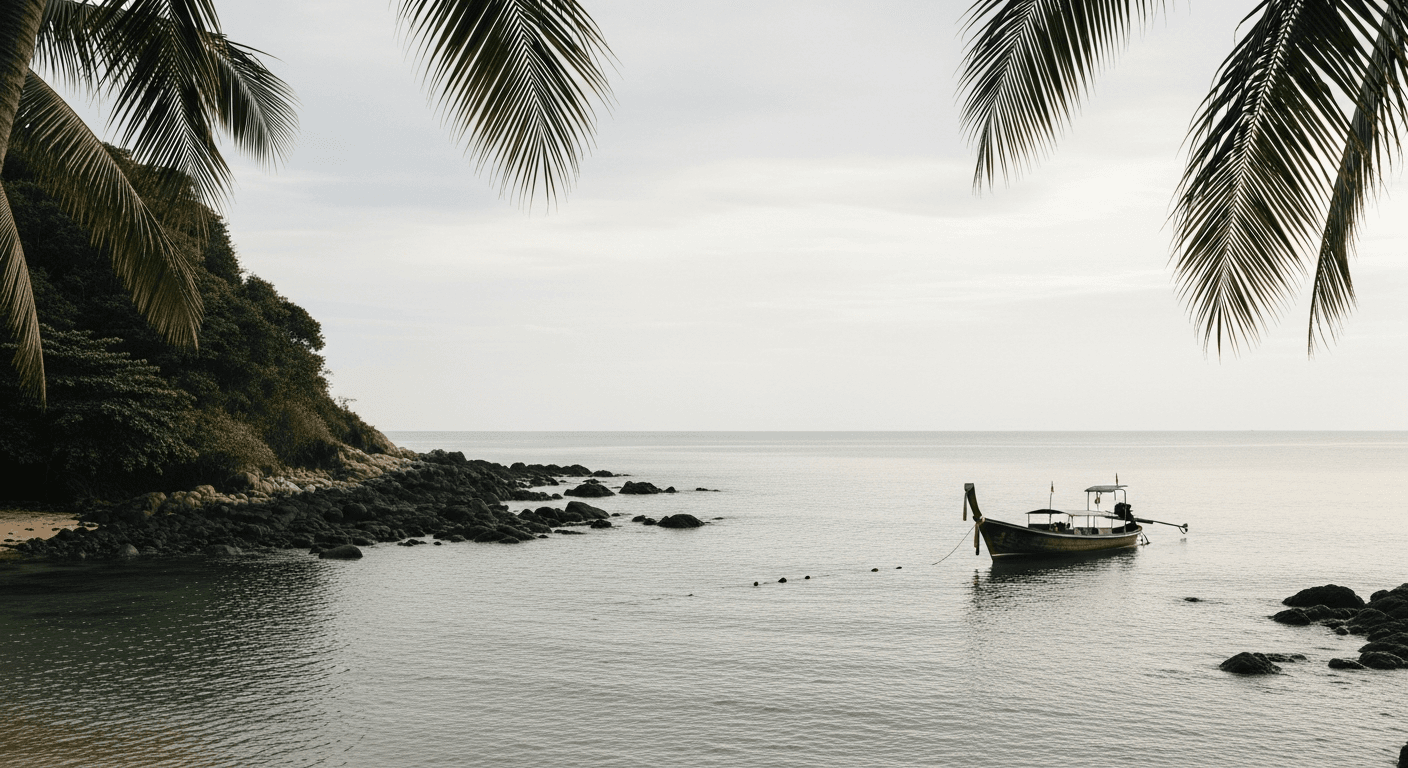
Koh Samui and Bali both work for tech company offsites, but they serve different planning priorities. Bali offers more direct international flights and deeper hotel inventory. Samui offers shorter ground transfers, less venue saturation, and simpler logistics for groups under 50 people who prioritize focus over scale.
Airlift and transfer time
Bali connects to more long-haul hubs. Direct flights arrive from Singapore, Hong Kong, Bangkok, Tokyo, Seoul, Sydney, and several European cities. For distributed tech teams pulling from multiple continents, routing through Denpasar reduces layover complexity.
Koh Samui handles fewer direct international routes. Most long-haul participants connect through Bangkok, Singapore, or Hong Kong. The Bangkok–Samui leg takes 70 minutes. Total door-to-door time from Singapore: around 4 hours. From Europe or the US West Coast: 18-22 hours including layovers.
The gap narrows after landing. Ngurah Rai Airport to Seminyak or Canggu takes 45-90 minutes depending on traffic. Ngurah Rai to Ubud takes 90-120 minutes. Koh Samui Airport to most resort areas takes 15-35 minutes. The island spans 25 kilometers at its widest point. Morning traffic exists but rarely adds more than 10 minutes to planned transfer times.
For groups prioritizing minimal post-flight friction, Samui's transfer advantage offsets the extra connection. For groups optimizing routing simplicity from dispersed origins, Bali's direct flights win.
Hotel and venue inventory
Bali supports larger event infrastructure. The island holds over 5,000 registered hotels and villas. Inventory spans budget guesthouses, mid-tier beach clubs, and 150+ properties at the luxury tier. Conference hotels in Nusa Dua offer ballrooms for 500+ people. Seminyak and Canggu have coworking-adjacent venues built explicitly for startup offsites.
Koh Samui runs leaner. The island has roughly 300 hotels and villa complexes. The luxury segment includes around 40 properties, concentrated in Choeng Mon, Bophut, and Mae Nam. Venues designed for groups of 100+ exist but number fewer than ten. Most high-end properties cap at 50-70 rooms.
This creates two effects. First, Bali offers more fallback options if your first-choice venue has availability conflicts. Second, Samui's smaller inventory means booking 30-50 rooms at a single property gives you meaningful exclusivity. You will not share the resort restaurant with three other corporate groups during your offsite week.
For groups over 80 people, Bali's inventory depth matters. For groups under 50, Samui's scale fits the format better.
Infrastructure and saturation
Bali has built dense offsite infrastructure. Coworking spaces like Dojo Bali and Tropical Nomad run regular programming for startup retreats. Beach clubs in Canggu host weekly founder mixers. The visa-on-arrival system handles most nationalities at 500,000 IDR for 30 days, extendable once.
This infrastructure creates network effects and saturation. If you run a tech offsite in Canggu during Q1 or Q4, you will encounter other tech offsites at the same cafes, coworking spaces, and evening venues. For companies trying to create distinct team culture moments, this ambient overlap reduces signal.
Koh Samui has less ambient tech density. The island sees corporate groups, but they skew toward automotive incentive trips, pharma leadership meetings, and finance offsites. You will not run into another Series B SaaS team at the beach restaurant. Visa-on-arrival covers 64 nationalities for stays up to 30 days at no charge. China, India, and Russia require e-visas processed in 3-5 business days.
Bali's infrastructure makes self-organized offsites easier. Samui's quieter environment makes programmed offsites more distinct.
Regulatory and operational friction
Indonesia's business visit regulations add minor complexity. If your offsite includes customer presentations or partner workshops, participants technically need business visas rather than tourist visas. Enforcement is inconsistent but creates planning exposure. Currency is Indonesian Rupiah. USD and EUR are accepted at tourist-facing businesses but at poor exchange rates.
Thailand allows business activities on tourist visas provided no local income is earned. Most corporate offsites fall under this interpretation. Currency is Thai Baht. ATMs are ubiquitous and international cards work reliably. AIS and DTAC sell tourist SIM cards with 50GB data plans for under 500 THB.
Both destinations handle international payments easily. Both support reliable internet at resorts and villas, though Bali's coworking infrastructure gives more backup connectivity options. Neither poses significant operational blockers for standard offsite formats.
Cost structure comparison
Budget distribution differs between the two islands. The comparison below reflects typical ranges for 35-50 person groups booking 4 nights / 5 days.
| Cost category | Bali | Koh Samui |
|---|---|---|
| International airlift (avg per pax, ex-US) | $850-1,100 | $950-1,250 |
| Boutique hotel (per room/night, double occ) | $180-320 | $220-380 |
| Villa rental (10-bedroom, per night) | $1,200-2,800 | $1,800-3,500 |
| Private event space (full-day) | $800-1,500 | $1,200-2,200 |
| Group dinner (per person, 3 courses + wine) | $45-75 | $55-85 |
| Ground transportation (private van, per day) | $60-90 | $70-110 |
Bali delivers 10-15% lower costs across most categories. For groups with fixed budgets under $3,000 per person all-in, Bali's pricing provides more margin. For groups optimizing for other variables, Samui's premium reflects scarcity value and lower congestion.
The case for Samui at sub-50 headcount
Koh Samui works best for leadership offsites, executive retreats, and focused product sprints where the goal is isolation rather than stimulation. Groups of 20-40 people can rent an entire beachfront villa and control the full environment. The island's compact geography means venue, accommodation, and activity locations sit within 20 minutes of each other.
The lack of ambient tech scene removes FOMO and status signaling. Participants cannot default to "networking at the coworking space" when they should be in the team session. The offsite exists in a defined bubble.
For companies in Series A through Series C stages running their second or third offsite, Bali's familiarity becomes a liability. If your team already knows Canggu and Ubud from prior trips, those locations do not create the reset effect that justifies pulling people off delivery for a week. Samui offers novelty without logistical complexity.
For first-time offsites or groups over 60 people, Bali's infrastructure and inventory make the planning process more forgiving. For repeat offsites optimizing for signal-to-noise ratio, Samui's smaller scale and lower saturation deliver the format better.
Booking lead time and flexibility
Bali's larger inventory allows shorter booking windows. Properties in Seminyak and Ubud can often accommodate 30-room blocks with 60 days notice, even during high season (July-August, December-January). Backup venue options exist if your first choice falls through.
Samui requires longer lead time. Luxury properties with 40+ rooms book out 4-6 months ahead for high season (December-March). The smaller hotel count means less flexibility once you commit. Cancellation policies typically lock in 50% deposits at 90 days out, full payment at 30 days.
Both islands allow deposits in USD or EUR. Both work with international event insurance policies. Samui's longer planning horizon favors companies with predictable offsite calendars. Bali's flexibility favors companies making opportunistic decisions around funding events or acquisition milestones.
Halia responds to offsite briefs within 48 hours with site options, budget ranges, and logistics notes specific to your team composition. If you are deciding between Samui and Bali for an upcoming retreat, send the brief and we will map both options against your priority list.