Halal catering on Koh Samui is a sourcing and kitchen-control problem, and it needs to be solved before the group lands. Most well-known Thai restaurants on the island are not halal. The halal options that exist are mostly North Indian, Middle Eastern or Thai-Muslim kitchens, which are good but narrow in range. For groups from Malaysia, Singapore, Indonesia or the Gulf, and for mixed groups with some Muslim guests, the work is deciding where one menu serves everyone and where it needs to split.
This guide covers the decisions in the order planners usually face them: venue strategy, shared meals, beach BBQs, documentation, beverages and prayer logistics.
One venue or two: how to split a group at dinner
Use one venue with a certified halal set menu alongside the main menu whenever the venue can run both. Splitting a group across two restaurants costs you the shared evening, doubles your transfer logistics and puts your host or MC in one place only.
The one-venue model works when the kitchen can prepare the halal menu in a separate area with separately sourced certified meat. Five-star properties can usually do this with notice. Small independent restaurants often cannot, because they have one kitchen, one set of utensils and one supplier.
Two venues make sense in two situations:
- The group is mostly Muslim and a small minority wants pork or alcohol-forward dining. Put the majority in the halal venue and let the minority choose a separate option on a free evening.
- The best available restaurant for your concept has no halal capability and you will not compromise on the setting. Plan a second venue of equal standard for halal guests.
Avoid the middle path of one venue with a single "halal option" on a mixed menu. Without a separate prep line, that label means little to guests who observe strictly.
What the island offers
Expect three categories of halal food on Samui:
- North Indian kitchens. Reliable, widely halal, and strong for vegetarian and lamb dishes.
- Middle Eastern restaurants. Good for grills, mezze and Gulf-origin groups who want familiar flavors.
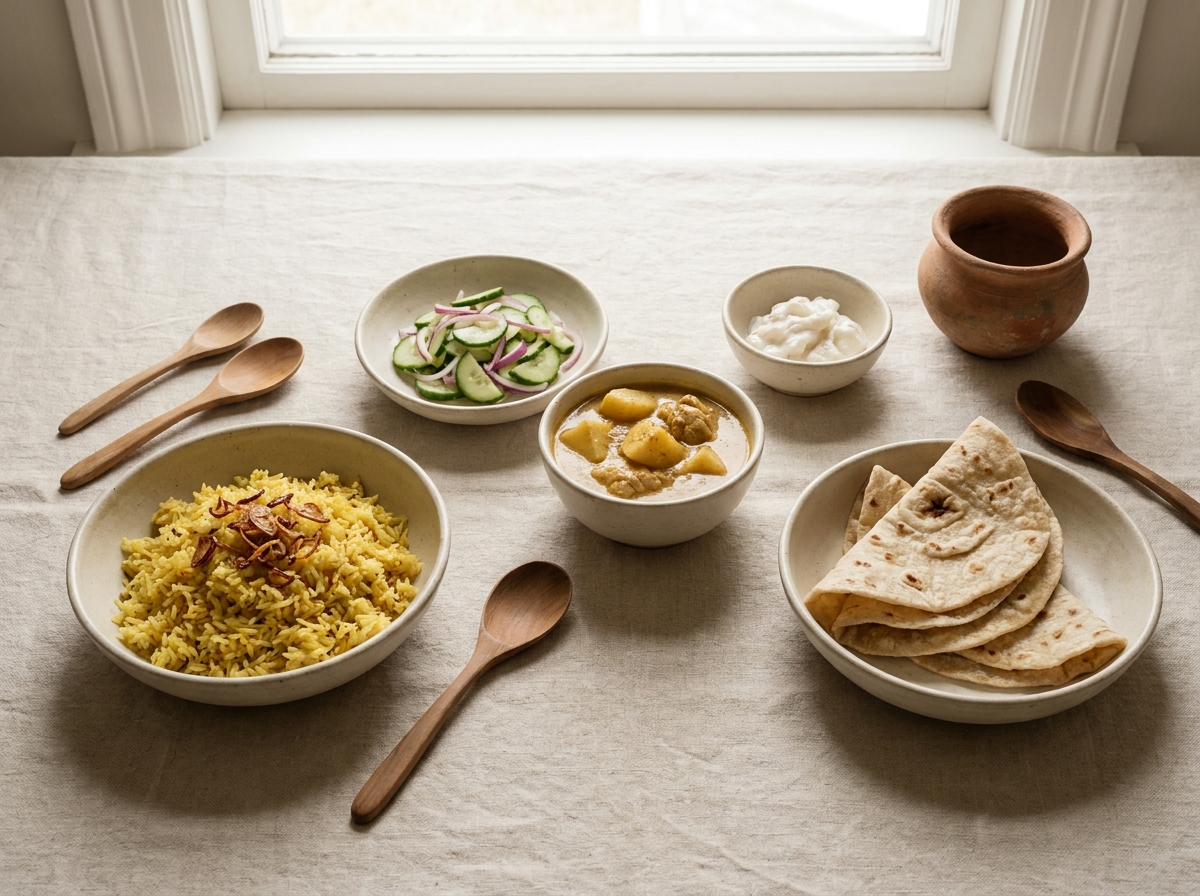
- Thai-Muslim kitchens. Local dishes such as massaman curry and roti, cooked halal as standard. These give guests the most direct experience of Thai food.
Fine-dining Thai halal is rare. If your brief calls for a seated, multi-course Thai dinner, plan on a hotel kitchen or a private chef team.
Halal-for-all on shared meals
Make activity-day lunches, working lunches and coffee breaks halal for everyone. This is the cleanest solution on any meal where the group eats together and nobody is choosing a restaurant.
The logic is simple. A halal menu is acceptable to every guest, including non-Muslim guests, and it removes the need for separate tables, separate serving lines and separate packed lunches on a boat or at a trailhead. It also removes the visible sorting of the group into two camps. You keep the group together on the meals where togetherness matters most.
The trade-off is menu range. Pork is out, and so are dishes cooked with alcohol, such as rice wine or mirin. Lard, gelatin and some sauces need checking. Thai cuisine works well within these limits, since seafood, chicken, beef, vegetables and curries carry most menus anyway.
Keep alcohol off the lunch table as well. A halal-for-all lunch with beer on the side undoes the point.
Beach BBQs: where halal fails most often
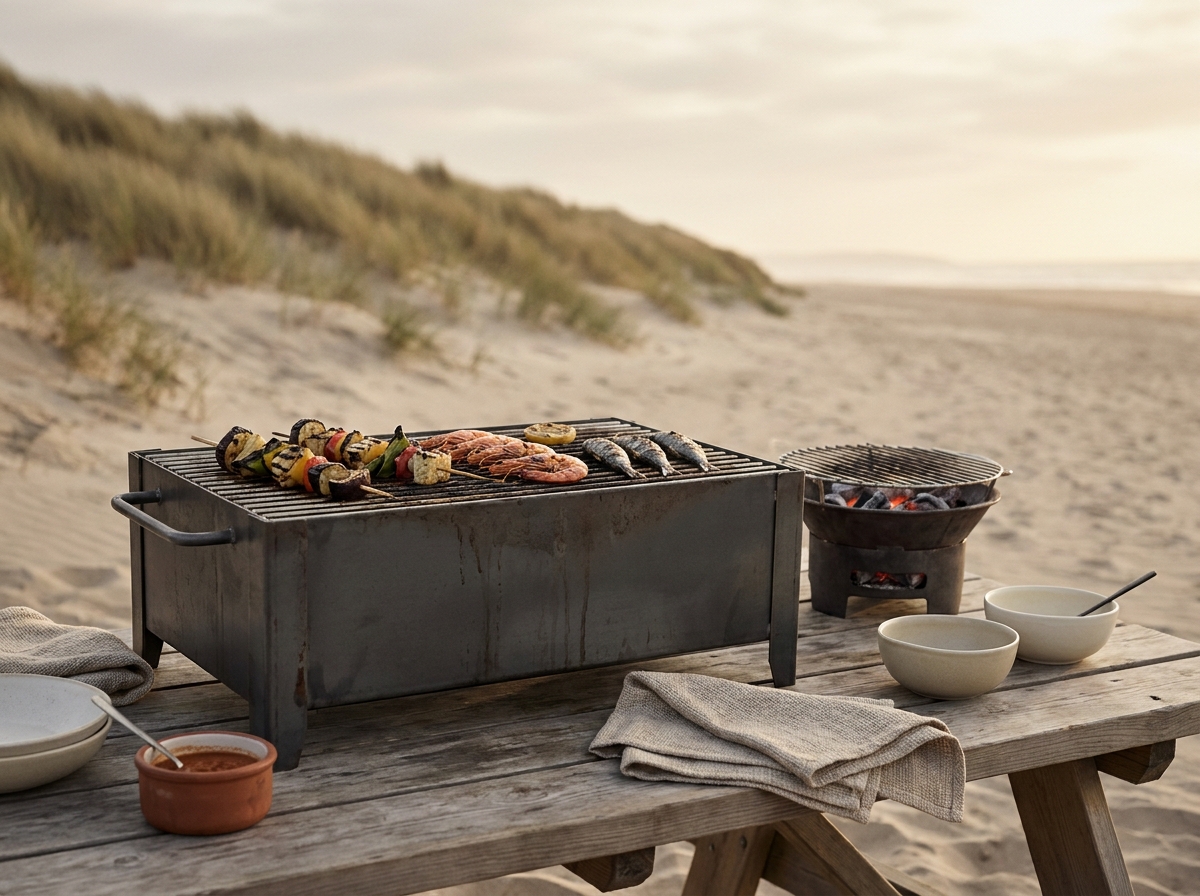
A halal beach BBQ needs three things: separately sourced certified meat, a dedicated grill, and a dedicated prep area. Without all three, the meal is not halal in any practical sense, regardless of what the menu says.
Cross-contamination is the usual failure. A caterer buys certified chicken, then grills it on the same surface as pork sausages, with the same tongs and the same cutting boards. Brief your supplier on these points:
- Certified meat arrives sealed and is stored apart from non-halal products.
- The halal grill is a separate unit used only for halal food.
- Knives, boards, tongs and trays are dedicated and marked.
- Marinades and sauces are checked for alcohol and pork derivatives.
- A named person on the catering team is responsible for the halal line.
For mixed groups, the simplest design is a halal BBQ for the whole group. If the client wants pork on the menu, run it as a physically separate station with its own staff, positioned downwind and away from the halal line. Plan on a lead time of around two weeks for certified meat sourcing on the island, and longer in peak season.
Ask for certification in writing
Request halal certification documents from every supplier before you confirm, and request them for each link in the chain. That means the kitchen, the meat supplier and, for outsourced catering, the caterer.
A verbal assurance that the food is "halal" is common and means little. Ask for:
- A current halal certificate for the kitchen or caterer, from the national Islamic certification body or an equivalent recognized authority.
- Supplier invoices or certificates that show the meat's origin and certification.
- A written description of how the halal line is separated from the rest of the kitchen.
- Confirmation that the certificate covers the specific premises where your event will run.
Check certificate dates. Share the documents with the client's group leader before arrival so they can confirm to their own guests. If a supplier cannot provide paperwork, treat the meal as not halal and plan accordingly. We decline to label a menu halal when documentation is missing.
Beverage packages when part of the group does not drink
Build two beverage tracks inside one package. Do not price a single open-bar package and expect non-drinkers to absorb the cost.
A workable structure:
- An alcoholic package for guests who drink, priced per head and applied only to them.
- A premium non-alcoholic package for everyone else: fresh juices, mocktails, specialty coffee and tea, young coconut and sparkling options.
- Matching glassware and presentation so non-drinkers are not holding a plastic cup while others hold crystal.
At a gala dinner, serve the welcome drink as a mocktail for the whole room and let the bar offer alcohol on request. Keep alcohol service away from the halal food line, and make sure no dish is cooked with wine or spirits.
Prayer times and space
Build prayer windows into the run of show. Five daily prayers set the rhythm, and the times shift through the year. On Samui, Maghrib falls around sunset, usually between 6:00 and 6:30 pm, and midday prayer lands near 12:15 to 12:30 pm. Check exact times for your dates before locking the schedule.
Practical steps:
- Schedule breaks of 15 to 20 minutes around midday and late afternoon on program days.
- Avoid starting a plenary or a boat departure at the exact prayer time.
- Provide a clean, quiet, private room with prayer mats and a qibla direction marker. A meeting room or a spare suite works.
- Provide a washing area nearby. Hotel restrooms with a bidet spray usually meet this need.
- On Friday, allow extra time for midday congregational prayer. Samui has mosques, and a transfer can be arranged with notice.
For off-site days, bring a portable setup: mats, a compass or qibla indicator, and a shaded space at the venue.
Decision table: which approach for which meal
| Meal type | Recommended approach | Why |
|---|---|---|
| Breakfast | Halal-for-all at the hotel buffet, with pork items labeled or removed from the group's section | Low effort, and guests choose individually |
| Activity-day lunch | Halal-for-all, no alcohol on the table | Keeps the group together in the field and avoids separate packed meals |
| Working lunch or coffee break | Halal-for-all | One menu removes tracking and serving errors |
| Gala dinner at a hotel | One venue, certified halal set menu alongside the main menu, separate kitchen line | Preserves the shared evening with proper kitchen control |
| Beach BBQ | Halal-for-all, or a physically separate pork station with its own staff | Certified meat, dedicated grill and prep area prevent cross-contamination |
| Free-evening dinner | Provide a short list of vetted halal restaurants | Guests choose, and no group logistics are needed |
| Welcome reception | Mocktail welcome for all, alcohol at the bar on request | Neutral start, with no one singled out |
Start with the headcount and the strictness
Before you design menus, ask the client two questions: how many guests require halal, and how strictly do they observe it. A group of 60 with 24 halal guests needs a different plan from a group of 60 where 50 do. The answers decide whether you run halal-for-all, a split venue or a parallel kitchen line.
Halia plans halal programs with certification checked in writing, kitchens briefed on separation and prayer windows built into the schedule. If you are scoping a program for a mixed or majority-Muslim group on Samui, send us your brief. We respond inside 48 hours. Contact Halia.