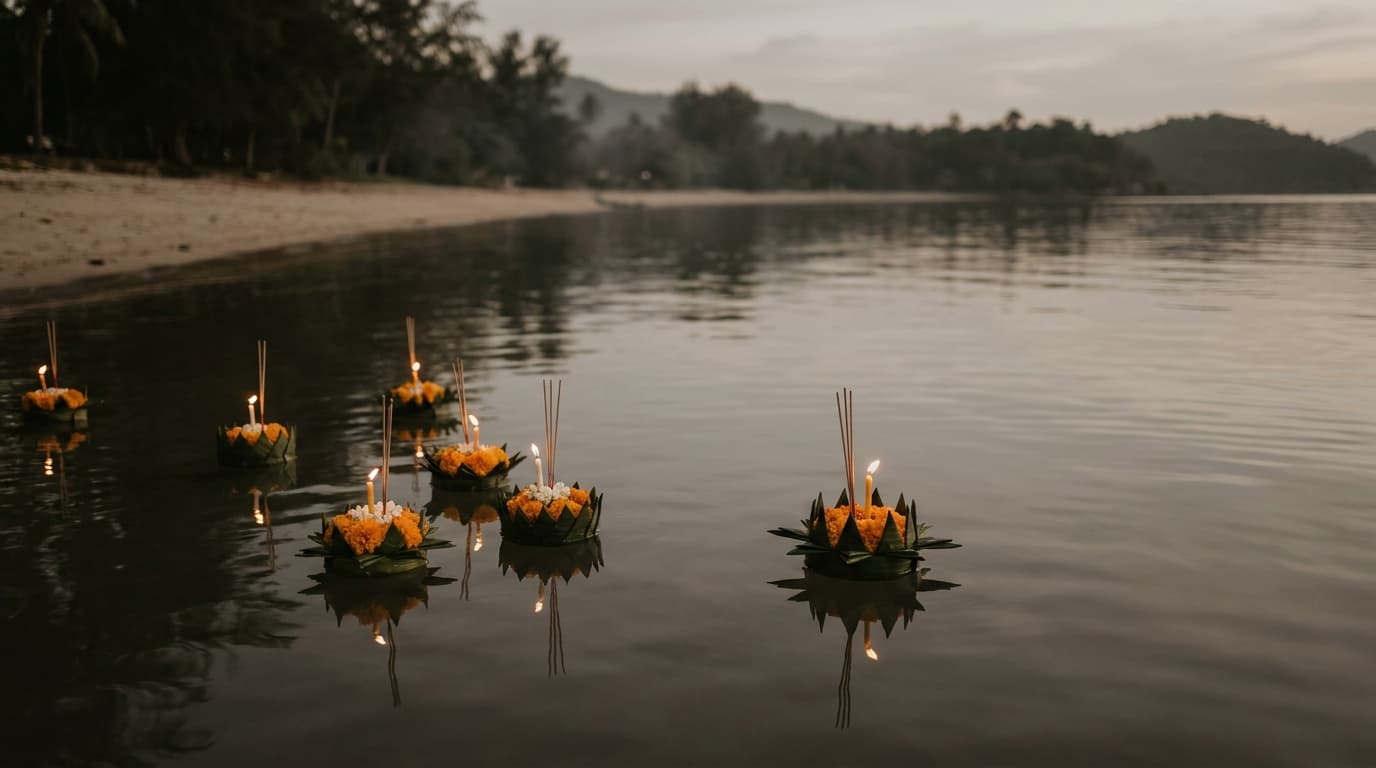
Loy Krathong is a Thai festival held on the evening of the full moon of the 12th month of the Thai lunar calendar, when people float a small decorated vessel called a krathong on water to give thanks and let go of bad luck. In 2026 the date falls around 24 November. For a group, it works as a hands-on cultural evening that sits comfortably inside an incentive or retreat program, provided the planning accounts for November weather and the respect the occasion calls for.
This guide covers how to present the festival, how to run a krathong workshop, how to pick a venue with a covered fallback, and what the evening looks like hour by hour.
What the festival means and how to present it
Loy Krathong is a thanksgiving and a release. Guests float a krathong to thank the water for what it provides and to send off grudges, bad luck and the previous year's weight. Many people make a wish as they set it down.
Brief your guests before the evening, ideally in the pre-arrival email and again for ten minutes on site. Keep it short and factual:
- Say what the krathong represents: gratitude and letting go.
- Explain that it is a personal moment. Guests set their own intention privately.
- Tell them the festival is a living tradition for Thai families, and that other people on the beach are celebrating too.
- Ask them to follow the lead of the host or a Thai team member on when and how to release.
Skip the "exotic ritual" framing. Your guests are participants in a local holiday, and a facilitator who speaks plainly about it earns more attention than one who oversells it.
Confirm the date early. Loy Krathong follows the lunar calendar, so it moves every year. The Tourism Authority of Thailand confirms dates and public events closer to the time, and we recommend checking with them again once your program is within a few weeks of running. Block the evening of the full moon and one buffer night either side if your itinerary allows.
Making krathongs as a group activity
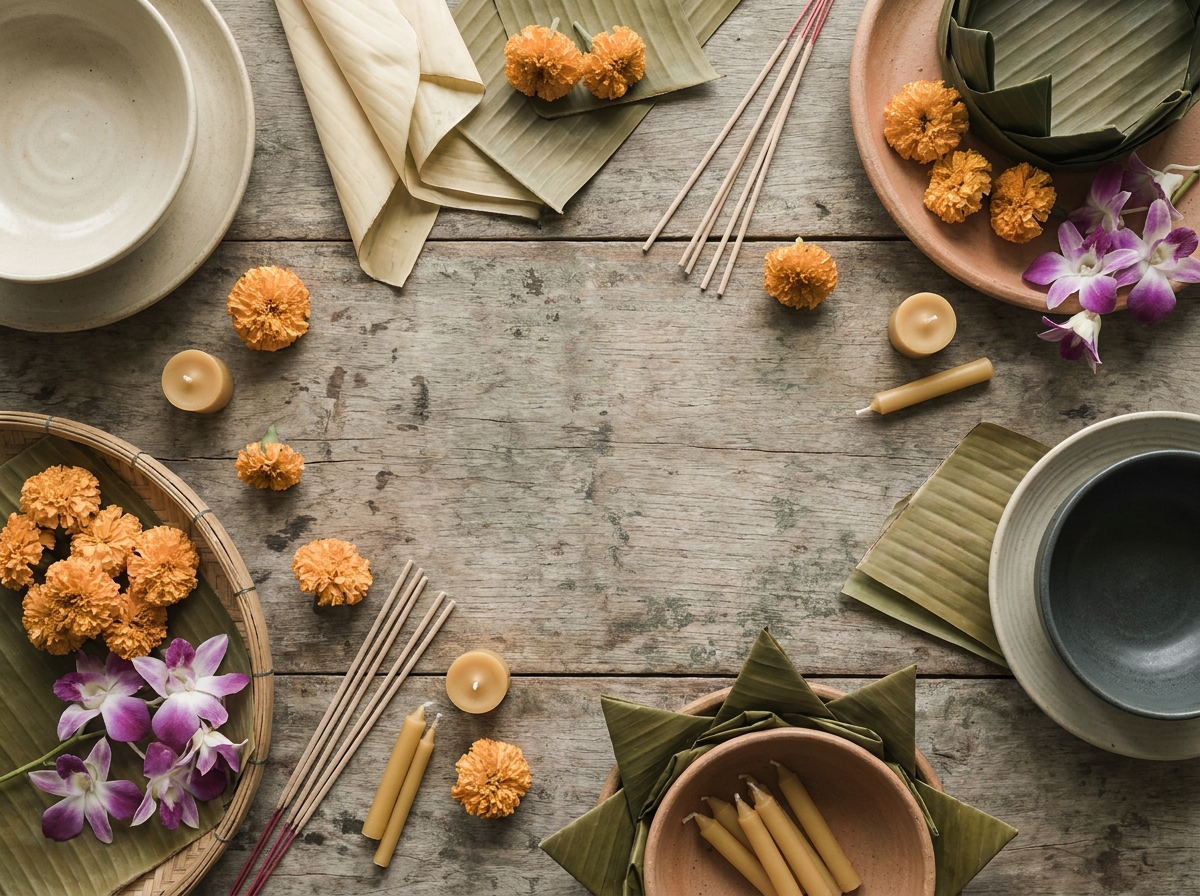
A krathong workshop is the easiest way to give a group something to do with their hands before the release. It takes 45 minutes, needs no skill, and produces something each guest keeps until the moment it goes in the water.
The traditional build uses a base, folded banana leaf, flowers, a candle and incense sticks. Insist on biodegradable materials:
- Base: a slice of banana trunk or a ring of bread. Never foam. Foam breaks into pieces that stay in the sea.
- Decoration: banana leaf folded into points, fresh flowers, orchid heads, marigolds.
- Extras: a small candle and incense sticks, kept minimal.
Set the workshop up at tables of six to eight, with all materials pre-cut so guests spend their time arranging. We plan on one facilitator per 10 to 12 guests, which means four facilitators for a group of 40. Local craftspeople who build krathongs for a living make the best teachers, and they will usually correct a guest's design with good humor.
Budget around USD 15 to 40 per person for materials and facilitation, depending on group size and how elaborate the setup is. Add a welcome drink and a place to wash hands. Flower pollen and banana sap stain, so tell guests not to wear anything precious.
Choosing a beach or hotel venue with a covered fallback
November is Samui's wettest month. Even on a good evening, the sky can turn within an hour. Plan every Loy Krathong event with a covered fallback built into the contract from the start.
You have two realistic venue types, and each has trade-offs.
| Factor | Public beach | Hotel beachfront or garden |
|---|---|---|
| Atmosphere | Local crowds, families, a lived-in festival feel | Controlled, quieter, easier to host |
| Crowd and noise | High. Hard to keep a group together | Low. Space reserved for your group |
| Covered fallback | Rarely available | Usually a terrace, pavilion or ballroom |
| Water access | Open shoreline, shared | Private or semi-private shoreline, or a pond |
| Hosting and catering | Needs a separate setup | Kitchen and service on site |
| Cost | Lower venue cost, higher logistics | Higher venue cost, lower logistics |
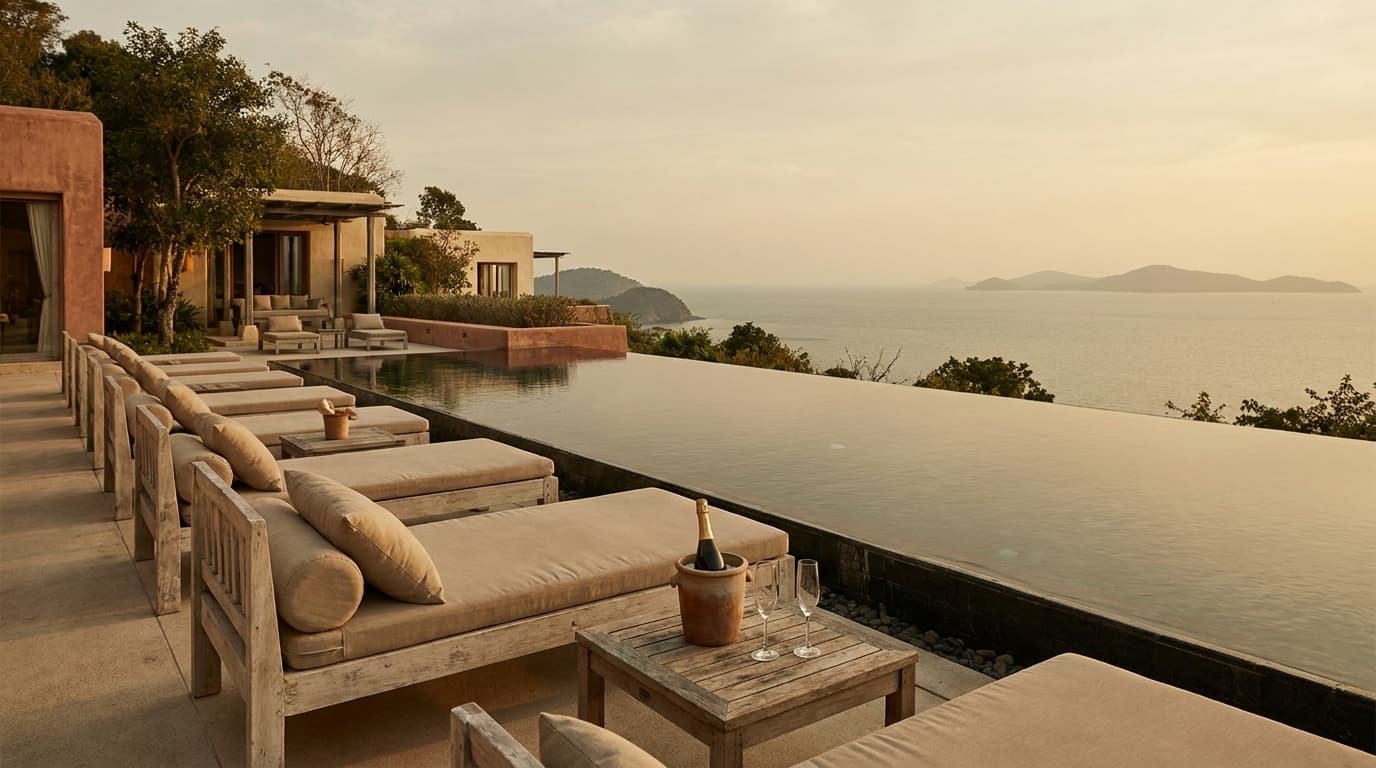
For groups over 30, we lean toward a hotel venue. Five-star properties on the north and east coasts often run their own celebrations, and some have a pond or a calm stretch of shoreline where krathongs can be released without chasing them through surf. Check that the property allows krathong release in its own water and has a plan for collecting the floats afterward.
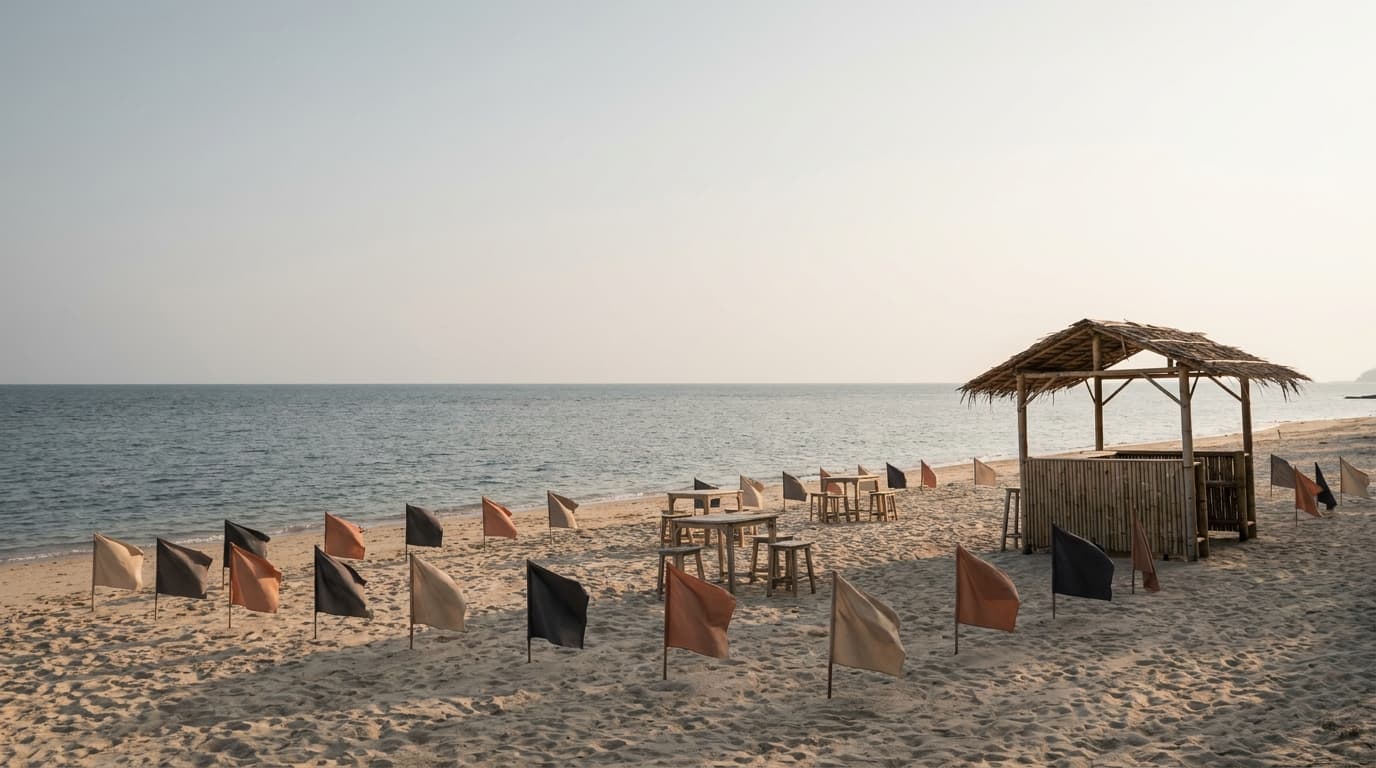
For smaller, more adventurous groups, a public beach gives the strongest sense of place. Pair it with a hotel terrace for the workshop and dinner, and walk down together for the release.
Whichever you choose, set a weather decision time. We use 1:00 pm on the day. If the forecast is heavy rain, the workshop and dinner move under cover, and the release happens during a dry window or in a pond or pool built for it.
The evening, hour by hour
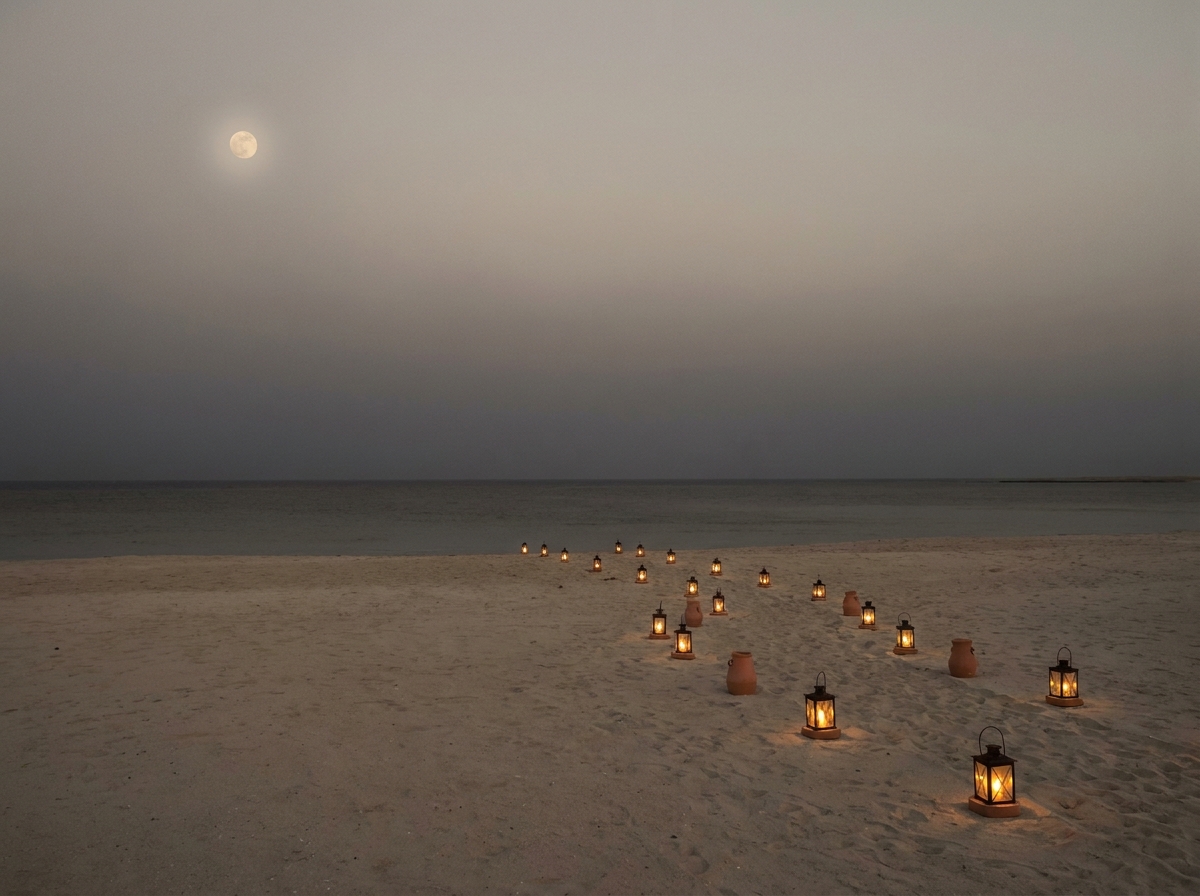
A well-paced Loy Krathong evening runs about four hours from guest arrival to close. Sunset on Samui in late November falls around 5:45 pm, and the full moon rises close to that time, so the release works best from 6:00 pm onward.
| Time | Activity | Notes |
|---|---|---|
| 1:00 pm | Weather decision | Confirm outdoor plan or covered fallback |
| 3:30 pm | Team on site | Tables, materials, facilitators, water access checked |
| 4:30 pm | Guest arrival | Welcome drinks, towels, short seating |
| 4:45 pm | Cultural briefing | Ten minutes on meaning and etiquette |
| 5:00 pm | Krathong workshop | 45 minutes, tables of six to eight |
| 5:50 pm | Walk to the water | Guests carry their krathongs, candles lit at the edge |
| 6:00 pm | Release | Staggered by table to avoid crowding |
| 6:20 pm | Quiet time | Photography, reflection, drinks by the water |
| 7:00 pm | Dinner | Thai menu, seated, covered if needed |
| 8:30 pm | Close | Transfers begin |
Stagger the release by table. Forty guests at the water's edge at once is chaotic, and it makes the moment feel like a queue. Groups of eight, five minutes apart, give each table room.
Sky lanterns, photography and other details
Sky lanterns. Restrictions apply in many places, including near airports, and Samui has one. Rules differ by location and change, so check with the venue and local authorities before planning any release. We do not include lanterns by default. The krathong is the center of the evening, and it works without them.
Photography. Hire one photographer and brief them to work quietly. Guests should be able to take their own photos, but ask them to keep phones down during the actual release. Do not photograph other families on the beach without asking, and do not direct local participants for the camera. Candlelit faces are lovely to shoot, but a flash ruins the light for everyone.
Clean-up. Assign someone to retrieve the krathongs after the evening, in line with the venue's rules. Biodegradable materials make this easier, and it shows respect for the water the festival honors.
Dietary needs and access. Beach sand is hard for guests with limited mobility. Set the workshop on a firm surface, and keep a route to the water that works for wheelchairs or add an alternate release point such as a pond edge.
Loy Krathong rewards early planning. Venues book out around the full moon, facilitators are in demand, and the date shifts every year. If you are considering it for a November program, send us your dates, headcount and venue preferences, and we will respond to briefs inside 48 hours. Start the conversation on our contact page.