The most under-discussed decision on a Thai program brief is the airport routing. Brochures show Samui Airport as the obvious gateway. The actual choice — direct to Samui (USM), through Bangkok, or via Surat Thani (URT) — has more variables than most planners weigh, and the wrong call can either burn 12,000 USD of unnecessary flight cost or create a logistical disaster on arrival day.
This is the framework Halia uses on every program brief.
What "direct to Samui" actually means
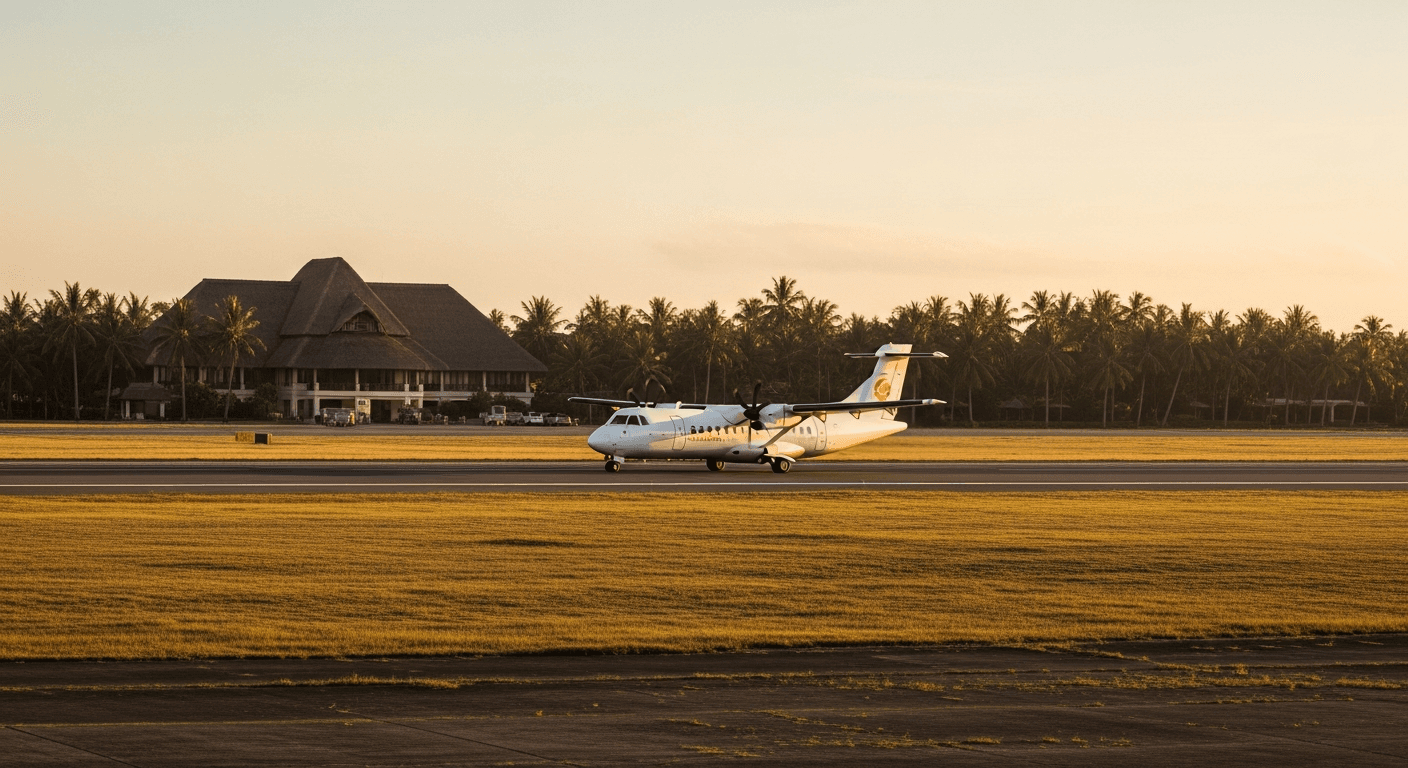
Samui Airport (USM) sits 5 km from the main hotel cluster. Most properties are inside 30 minutes from arrival to room. The "direct" caveat: USM only has direct flights from Bangkok (BKK), Hong Kong (HKG), Singapore (SIN), Kuala Lumpur (KUL), and Chengdu (CTU). Everything else routes through one of those hubs.
For agencies sourcing groups from the US, UK, Europe, Australia, or the Middle East, "direct" almost always means a connection at one of the above. Bangkok is the most common because Bangkok Airways operates the Samui run with the most frequency.
So when a brief says "direct to Samui," the operational decision is really: short layover at BKK with same-day onward to USM, or longer Bangkok stop with overnight before USM transit.
The decision framework
Three variables drive the right routing:
| Factor | Favors BKK overnight | Favors same-day USM |
|---|---|---|
| Group size | 80+ pax (single-flight USM blocks get harder) | Under 50 pax |
| Origin time zone | Far (US East/West, Europe) — overnight reset helps | Asia-Pacific origins |
| Program length | 5+ days (extra day fits) | 3-4 days (every day matters) |
| Participant tier | Senior (overnight at premium hotel = part of the experience) | Junior/mid (extra night feels like a cost padder) |
| Budget posture | Generous (overnight stay is incremental) | Tight (every USD matters) |
If the brief leans toward the left column on most factors, route through Bangkok with an overnight. If it leans right, push for same-day USM.
When a Bangkok overnight adds program value
The temptation when adding a Bangkok night is to treat it as filler. That's a mistake. Bangkok at the front of a Samui program can do real work if it's deliberately programmed:
- Welcome dinner at a destination Bangkok restaurant. Sets a tone the island can't (high energy, urban, recognizable city brand). Examples: rooftop venues with skyline views, signature restaurants from international chefs, cultural-immersion dining experiences.
- Optional cultural half-day on Day 2 morning. Temple visit, market walk, traditional crafts. For first-time-Asia participants, this anchors the broader trip in a way that pure island time cannot.
- Spa or wellness break. For senior-cohort programs, a Bangkok five-star spa morning before the Samui flight resets the long-haul fatigue.
Done well, the Bangkok night turns a "saving on flights" rationale into a "broader Thailand experience" narrative.
Done badly, it just adds 14 hours of hotel and transfer time that participants would rather skip.
When to push for direct USM
For programs where every program day matters, route direct.
- 3-day incentive programs lose 30 percent of program time if a Bangkok overnight is added. Keep it tight.
- Repeat-Asia participants who've been to Bangkok before find the layover annoying. Skip it for them.
- Groups under 50 can usually get the full block on a single direct flight without difficulty.
The premium for direct USM is meaningful but not catastrophic — typically 200-400 USD per pax round-trip vs. Bangkok routing. For a 30-pax program, that's 6,000-12,000 USD total. For a 100-pax program, 20,000-40,000 USD. The latter is enough to fund an additional program day or upgrade the gala. Math that needs a deliberate call.
What about Surat Thani?
Surat Thani (URT) sits on the mainland. Flights are cheaper (often 100-200 USD per pax below USM) and include some routes USM doesn't. The trade-off is the ground+ferry transfer to Samui — typically 90 minutes ferry plus another 30-60 minutes of ground transport on either end, total 3-4 hours added each way.
For large groups (150+) on tighter budgets, the per-pax savings can fund a meaningful program upgrade. For senior cohorts or shorter programs, the time cost almost never pencils.
Halia coordinates Surat Thani routings for cost-conscious programs but doesn't recommend them as default. The total participant experience — a long-haul flight followed by a fast-ferry transfer — sets the wrong tone for a premium program.
Halia's standard recommendation by program profile
For most programs, the Halia default routing is:
- Incentive programs, 50-150 pax, US/EU origin, 5+ days: Bangkok overnight at the front. Programmed welcome dinner and Day 2 morning experience. Direct USM flight on Day 2 afternoon.
- Incentive programs, 50-150 pax, regional origin (AU, SG, HK, JP): Direct USM. Bangkok adds no value when the participant cohort knows Asia.
- Executive retreats, 10-40 pax, any origin: Direct USM. Senior cohorts value the time savings; the overnight hassle isn't worth it.
- Programs above 150 pax: Bangkok overnight + chartered onward flight to USM. The single-flight USM constraint pushes operations toward the chartered option for capacity reasons alone.
The right call for your specific program depends on the brief. Send it to us and we'll come back within 48 hours with the routing recommendation alongside the proposal.
For more on Samui's airlift ecosystem specifically, see Samui airlift routes and flight planning for incentive groups (companion piece, scheduled for the cron-driven publish queue).