Koh Samui in October and November sits inside the island's own rainy season, which runs from roughly October to December and usually peaks in November. Samui is largely unaffected by the southwest monsoon that hits Phuket and the Andaman coast, so the common assumption that the whole country is wet at the same time is wrong. The Gulf has its own pattern, and it is the one that matters for a program on Samui.
For a planner, the practical issue is the sea. Heavy rain can be designed around. Rough water in the Gulf for several days at a time removes whole program days. This article covers what to expect, what survives, how pricing behaves, and when we recommend moving dates.
What October and November look like on the water
October brings rising rainfall risk, and November is usually the wettest month, with frequent heavy rain and rough seas that can last for days. December brings drier weather back. January to April is the most reliable window for any group program that depends on the sea.
| Month | Rainfall risk | Sea conditions for boat days | Group suitability |
|---|---|---|---|
| September | Moderate, showers common | Mostly workable, some rough days | Good with a land fallback |
| October | Rising, heavier spells | Variable, cancellations likely | Workable with a rain plan |
| November | Highest of the year | Rough for days at a time | Only for land-based programs |
| December | Easing, drier through the month | Improving, Ang Thong reopens 15 December | Good from mid-month |
| January | Low | Reliable | Strong |
| February | Low | Reliable | Strong |
| March | Low | Reliable | Strong |
| April | Low, heat rises | Reliable | Strong, plan for midday heat |
Treat the table as a planning guide. Individual weeks vary, and a dry two-week stretch in November is possible. We do not build a program on that possibility.
Why sea-based days are the first casualty
Yacht days and Ang Thong Marine Park trips fail first because they depend on both weather and sea state, and neither can be confirmed far ahead. A boat captain makes the final call on the morning, and a group of 60 guests cannot be rerouted at that point without a prepared alternative.
Ang Thong adds a fixed constraint. The Department of National Parks closes the park every year from 1 November to 15 December. No operator can offer it in that window, whatever the forecast says. Programs in November and early December that include a boat day go to the smaller islands off the south coast, such as Koh Madsum and Koh Tan, and only when the sea allows.
Three things follow from that:
- Do not sell Ang Thong to a client for dates between 1 November and 15 December.
- Describe any November boat day to the client as conditional from the first proposal.
- Keep the south coast islands as the default, with a land program of equal value as the fallback.
Program elements that survive rain
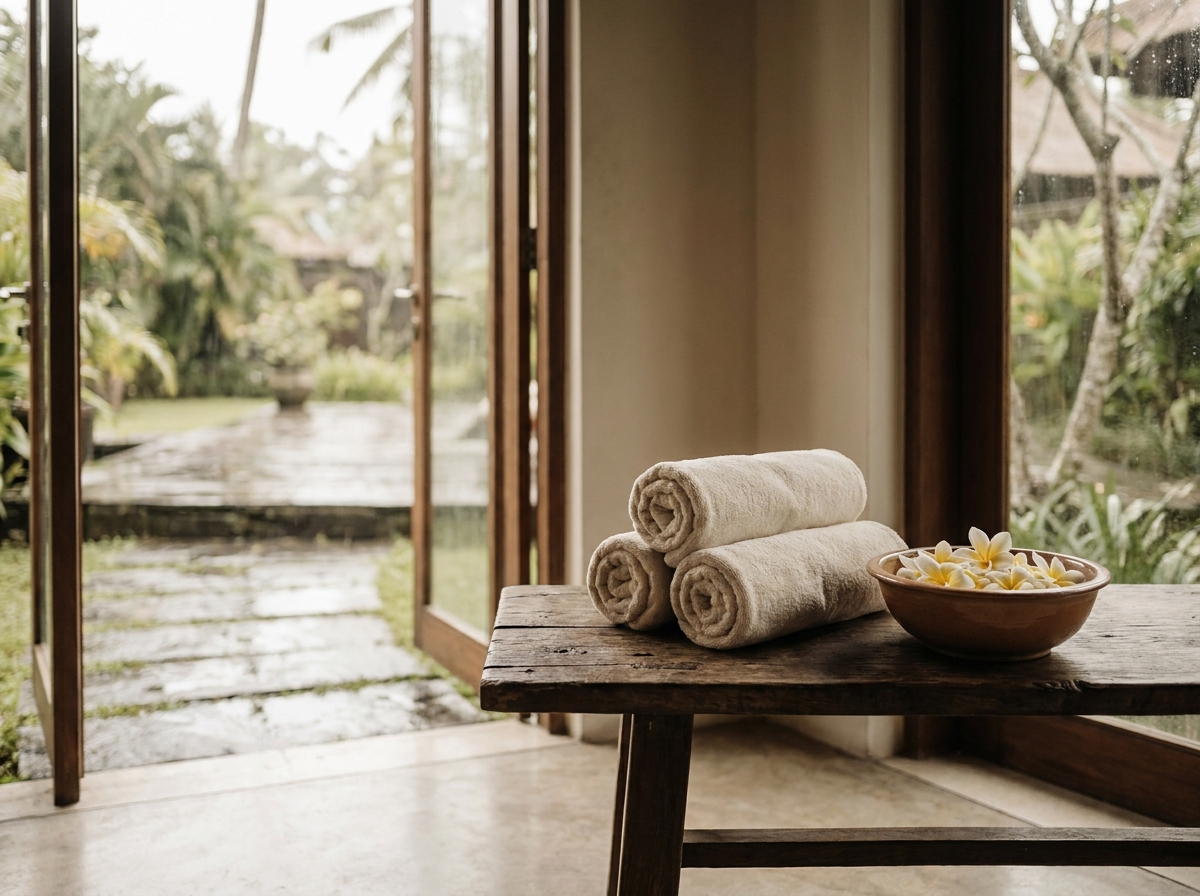
Spa, cooking, private dining and villa-based evenings hold up in heavy rain, and they are the core of any October or November program. All four run under cover, depend on no sea crossing, and can be moved between days with little loss.
- Spa programs. Treatment rooms at our partner hotels, including Banyan Tree Samui, Six Senses Samui and Four Seasons Koh Samui, work in any weather. A group of 40 needs staggered slots, so book the full schedule early.
- Cooking sessions. Hands-on Thai cooking runs in covered kitchens. A certified halal kitchen or a vegetarian-focused menu can be arranged for groups that need it.
- Private dining. Seated dinners in a ballroom, a covered pavilion or a pool villa suit rainy evenings. A terrace dinner needs a roofed backup with the same table plan.
- Villa-based evenings. Private villas offer a contained setting for cocktail evenings, live music and chef's tables. Guests stay dry, and transport is short.
Outdoor elements need a different treatment. Beach dinners and sunset cocktails can run in the gaps between showers, but they should always carry a pre-agreed indoor move. We set the cutoff for that decision at a fixed time, usually mid-afternoon, so that catering and the audiovisual team know where to be.
Pricing and availability in low season
October and November are low season on Samui, and hotels generally offer lower room rates and more availability than in the peak months. The size of the reduction varies by property and by week, so we do not quote a standard figure. Larger room blocks, and blocks at a single property, are easier to secure than in January or February.
Activity pricing moves less. An incentive day activity usually runs USD 150 to 400 per person, and the sea-based items sit at the top of that range. Operators price in the risk of cancellation, so expect tighter terms on boats and yachts than on land activities.
Budget this way:
- Use the room savings to fund a second, land-based option for every sea-dependent day.
- Ask operators for weather cancellation terms in writing before signing. Refunds, credits and rebooking rights differ between suppliers.
- Confirm that the venue can host the full group indoors for any meal that was planned outdoors.
Low season also means a thinner supplier pool. Some boats go into maintenance and some venues reduce staff. Booking transport, entertainment and any specialist production early matters more than it does in peak months.
Building a rain plan and a flexible boat day
A rain plan is a second complete program, with its own venues, transport and catering confirmed in advance. A list of ideas for the day does not qualify. The aim is that a decision at 7 a.m. changes the location and leaves the experience intact.
For the boat day, we recommend this structure:
- Hold two days. Reserve the boat on a primary day and a backup day, ideally with a land-based element on the other.
- Set a decision point. Check the marine forecast and operator advice about 24 hours ahead, then confirm again early on the morning.
- Name the fallback. Pair each boat day with a spa, cooking or private dining program that is already booked and budgeted.
- Agree the destination. In November and early December, the south coast islands such as Koh Madsum and Koh Tan replace Ang Thong. If the sea rules those out, the land program runs.
- Brief the client early. The client should know the order of preference before arrival, so a change on the day is an agreed step.
Our post on weather buffers for Samui programs covers the wider approach to schedule slack, including how to place buffer days across a three to five day itinerary.
When we recommend moving dates
We recommend moving dates when the sea is central to the program. A yacht day built as the finale, a brand moment on the water, or an Ang Thong visit as the main attraction all fail the test in November. No fallback replaces them with equal value.
Move dates in these cases:
- The client's proposal depends on Ang Thong between 1 November and 15 December.
- The program needs two or more guaranteed sea days.
- Outdoor filming, photography or a stage event is the main deliverable.
- The group is large enough that no single covered space can hold it at full capacity.
If the dates are fixed, we reshape the program around land-based elements, and we say so in the proposal. Late December and January to April give the most reliable conditions, and mid-December is a reasonable compromise once Ang Thong reopens on 15 December.
October and November programs work well when they are designed for the season. A spa-led retreat, a culinary program or a villa-based leadership offsite can run in heavy rain without loss. If you are weighing dates for a group, send us the brief and we will respond promptly through our contact page.