Large-group transport on Koh Samui is constrained by vehicle availability, single-runway airport timing, and heat. For groups over 20 pax, you need at least two coordination calls with ground handlers before arrival day, and you need to accept that you cannot move everyone simultaneously. The island has four vendors with fleets large enough to service corporate programs running 30+ participants, and pricing runs THB 800–1,200 per person per day depending on routing density.
Vehicle types and capacity realities
The standard vehicle is a 12-pax Toyota Commuter minivan with luggage space for roller bags but not golf clubs. These vans handle 10 people comfortably with bags; 12 is maximum legal capacity but reduces legroom. For groups of 20–40 people, you deploy multiple vans rather than coaches because Samui's fleet of full-size coaches is small and coaches cannot access many resort driveways or beach clubs.
Full-size coaches (35–45 seats) exist but only three local operators maintain them. They work for airport-to-hotel transfers on wide resort access roads, but you cannot reliably book more than two coaches on the same day for the same client. Coaches cannot reach properties like Six Senses Samui, Kamalaya, or most clifftop villas. Budget coaches for large single-direction moves only, not for multi-stop itineraries.
VIP participants travel separately in Toyota Camry or Alphard vehicles. Camrys seat three passengers; Alphards seat six in captain chairs with space between rows. Alphards cost 40% more than Camrys but solve the problem when your C-level participant brings a spouse and assistant. For groups with separated VIP transport, you need a separate arrival manifest so drivers know who boards which vehicle.
Pickup trucks with bench seats in the bed are not used for corporate programs. Some DMCs offer them for "authentic" experiences; we do not because insurance coverage is poor and road dust ruins business casual clothing during dry season.
Samui Airport arrival logistics
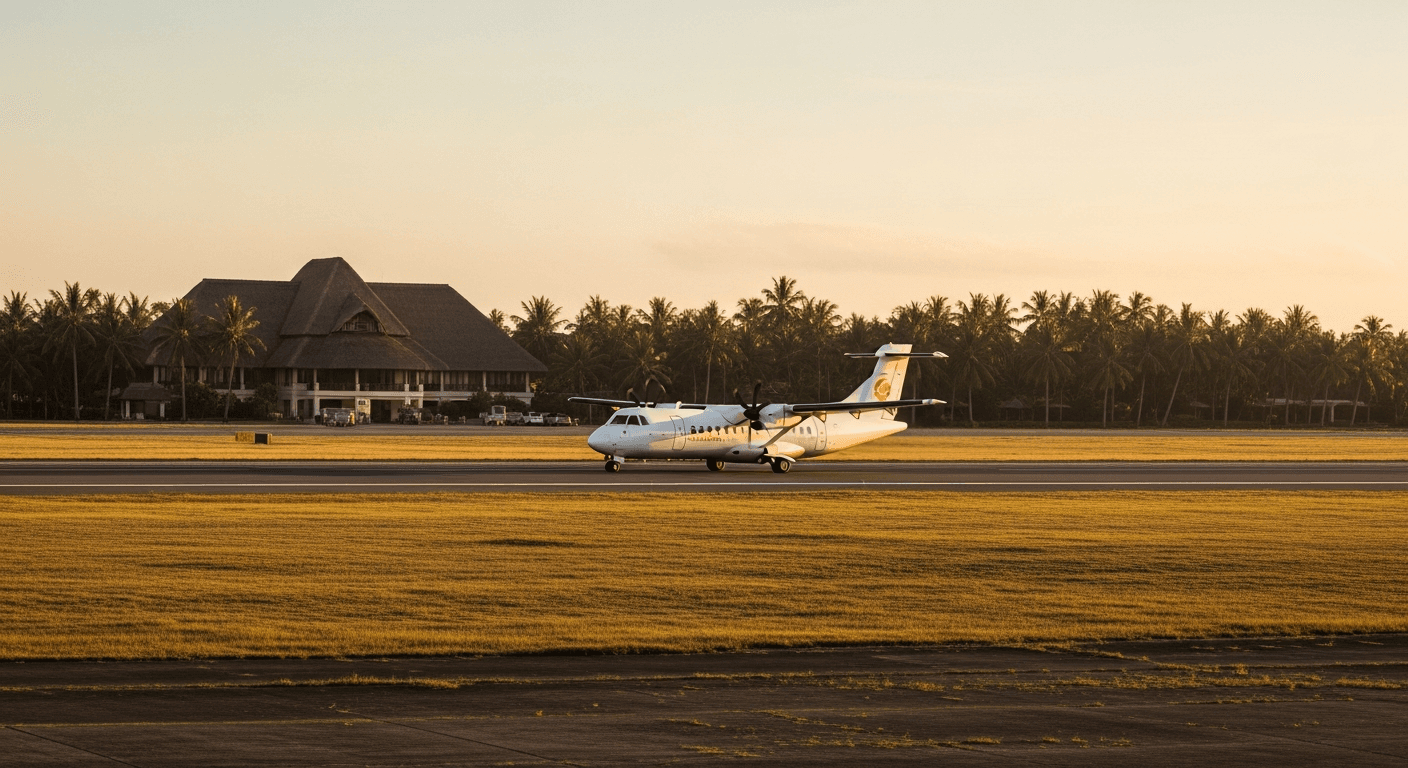
Samui Airport has one runway and gates that handle two jets simultaneously. International arrivals clear immigration in 20–35 minutes depending on prior flights. Baggage delivery to the single carousel averages 25 minutes after the jet door opens. First passenger out of the terminal appears 45 minutes post-landing; final passenger with checked bag appears 70–80 minutes post-landing. For a group of 30, your full complement is not in vehicles until 90 minutes after wheels-down.
You cannot position all vehicles curbside simultaneously. The airport pick-up lane holds six vehicles. For groups requiring more than six vehicles, overflow vehicles wait in the outer lot and drivers communicate by Line app when to rotate forward. This adds 8–12 minutes to load time for passengers assigned to later vehicles.
Brief drivers on participant names and company name, not just a sign with a logo. If three corporate groups arrive on the same flight, generic signs cause confusion. We print individual name cards for groups over 15 pax and assign a ground coordinator with a tablet checklist who confirms each participant boards the correct vehicle.
Flight delays happen. Bangkok Airways afternoon flights delay frequently during June–September due to morning weather stacking. If your group's flight delays more than 90 minutes, vehicle standby fees apply at THB 500 per vehicle per hour after the second hour. This is standard across all Samui vendors. For programs where schedule precision matters, book morning flights or accept the standby cost.
Transfer timing and heat windows
Do not move groups between 10:00–12:00 or 14:00–16:00 during March–September. Samui's roads are unshaded and vehicles with 10+ passengers struggle to maintain cooling when idling in traffic. Afternoon resort check-ins concentrate during 14:00–15:30, creating 20-minute queues on the ring road near Chaweng and Choeng Mon. Participants in the third van of a convoy are uncomfortable when the lead vehicle stops frequently.
Optimal transfer windows are 06:00–09:00 for early movements and post-16:30 for late afternoon. Evening transfers work but require vehicles to run headlights on unlit roads, and some drivers are less experienced in night driving. For multi-day programs, stagger departure times by 15-minute intervals rather than dispatching all vehicles simultaneously.
Beach club moves during midday are acceptable only if transit time is under 20 minutes and vehicles pre-cool for 10 minutes before loading. If your itinerary includes a midday venue change, route through a resort lobby or restaurant with air conditioning for a 15-minute hydration stop rather than direct vehicle-to-vehicle transfer.
Vendor reliability and fleet depth
Halia works with four primary transport vendors. Two maintain fleets of 15+ minivans; one specializes in VIP sedans and Alphards; one operates the coach fleet. No single vendor can handle a 40-person program alone at peak season (December, January, April, July, August). For groups over 30, we split the fleet across two vendors to ensure vehicle availability and create redundancy if one vendor has a breakdown.
Lead time matters. Book transport 45 days ahead for groups over 25 pax during peak months. For programs inside 30 days, you may need to accept mixed vehicle types or adjust timing because preferred vehicles are committed. Off-peak months (May, June, September, October) allow 21-day lead time.
Driver English proficiency varies. Lead drivers from our primary vendors speak functional English; backup drivers may not. For programs requiring drivers to assist with venue directions or participant questions, request English-speaking drivers in the brief and accept a THB 300/day surcharge per vehicle. For simple point-to-point transfers, language is not a constraint because routes are pre-programmed and drivers follow the lead vehicle.
Vehicle age averages 3–5 years. Samui's salt air and road conditions age vehicles faster than Bangkok. Inspect vehicles if brand perception matters; some 4-year-old vans show exterior wear even when mechanically sound. For brand-sensitive programs, specify vehicles under 3 years old and add 15% to the transport budget.
Cost structure
Baseline cost for 12-pax minivans runs THB 3,500–4,200 per vehicle per day. This includes driver, fuel for up to 80km, vehicle insurance, and 10 hours of availability. Rates vary by season, not by vendor. December and January pricing is 15–20% higher than shoulder months. Coaches cost THB 12,000–15,000 per day for comparable terms.
Per-person per-day costs depend on group size and routing complexity. A 30-person group with airport transfers, two venue changes, and evening return to resort runs THB 950–1,150 per person per day. A 15-person group with minimal routing runs THB 800–900 per person per day. Groups under 10 people see higher per-person costs (THB 1,200–1,400) because you still need vehicles with driver time.
| Group Size | Vehicle Configuration | Daily Cost (THB) | Per-Person Daily Cost (THB) |
|---|---|---|---|
| 8–10 | 1 minivan | 4,000 | 400–500 |
| 20–25 | 2 minivans | 8,400 | 336–420 |
| 30–35 | 3 minivans | 12,600 | 360–420 |
| 40–50 | 1 coach + 2 minivans | 20,400 | 408–510 |
| 50–60 | 2 coaches | 30,000 | 500–600 |
Additional costs include night surcharges (20% for vehicle dispatches after 22:00), overtime beyond 10 hours (THB 400/hour per vehicle), and standby time at venues exceeding 30 minutes (THB 300/hour). Ferries to neighboring islands are separate; Koh Phangan ferry costs THB 350 per person round-trip and requires separate ground transport on the destination island.
Operational coordination requirements
Submit a transport manifest 10 days before arrival. Include participant names, arrival flight numbers, hotel room assignments, daily itinerary with venue addresses and timing, and special requests (wheelchair access, child seats, cooler for medications). Changes inside 72 hours may incur replanning fees if they require additional vehicles.
Assign one participant as vehicle captain for each van. This person holds the driver's contact number, confirms headcount before departure, and communicates delays. For groups with multiple vans, captains form a Line group chat with the ground coordinator.
Build 15-minute buffer into published itinerary timing. Samui traffic is light compared to Bangkok, but construction, resort events, and weather create unpredictable delays. If your program includes back-to-back timing where one delay cascades, identify which segments have flex and communicate this to drivers in advance.
For multi-day programs, park vehicles overnight at the resort when possible. This eliminates morning dispatch delays and allows earlier departure times. Not all resorts allow vendor vehicle parking; confirm during site inspection. Resorts that prohibit overnight parking require drivers to arrive 20 minutes before scheduled departure, which constrains early morning timing.
Halia responds to transport briefs inside 48 hours with vehicle recommendations, per-person budget, and timing feasibility assessment. For groups over 35 pax or programs requiring ferry coordination, we include a backup vehicle plan in case of mechanical issues. Contact us at /contact with participant count, arrival details, and draft itinerary.